
Join us for service at:
Meadowbrook Country Club
2149 N. Green Bay Road
Racine, WI 53405
Sunday Summer Services 10 a.m.



Given
We are on the last week of this sermon series: Blessed – Broken – Given. To recap briefly, at the core of our beings we are BLESSED, sacred, good, beautiful. Do not let anyone tell you otherwise. The idea that we are sinful to our core is, very frankly, a lie.
Last week we talked about how we are all BROKEN bozos on the bus. None of us is perfect. All of us have experienced heartache, pain, and suffering. And we’ve all caused it as well (not necessarily intentionally).
This brings us to GIVEN. I thought this would be the easiest to explain, but oddly I’ve found it to be the most difficult.
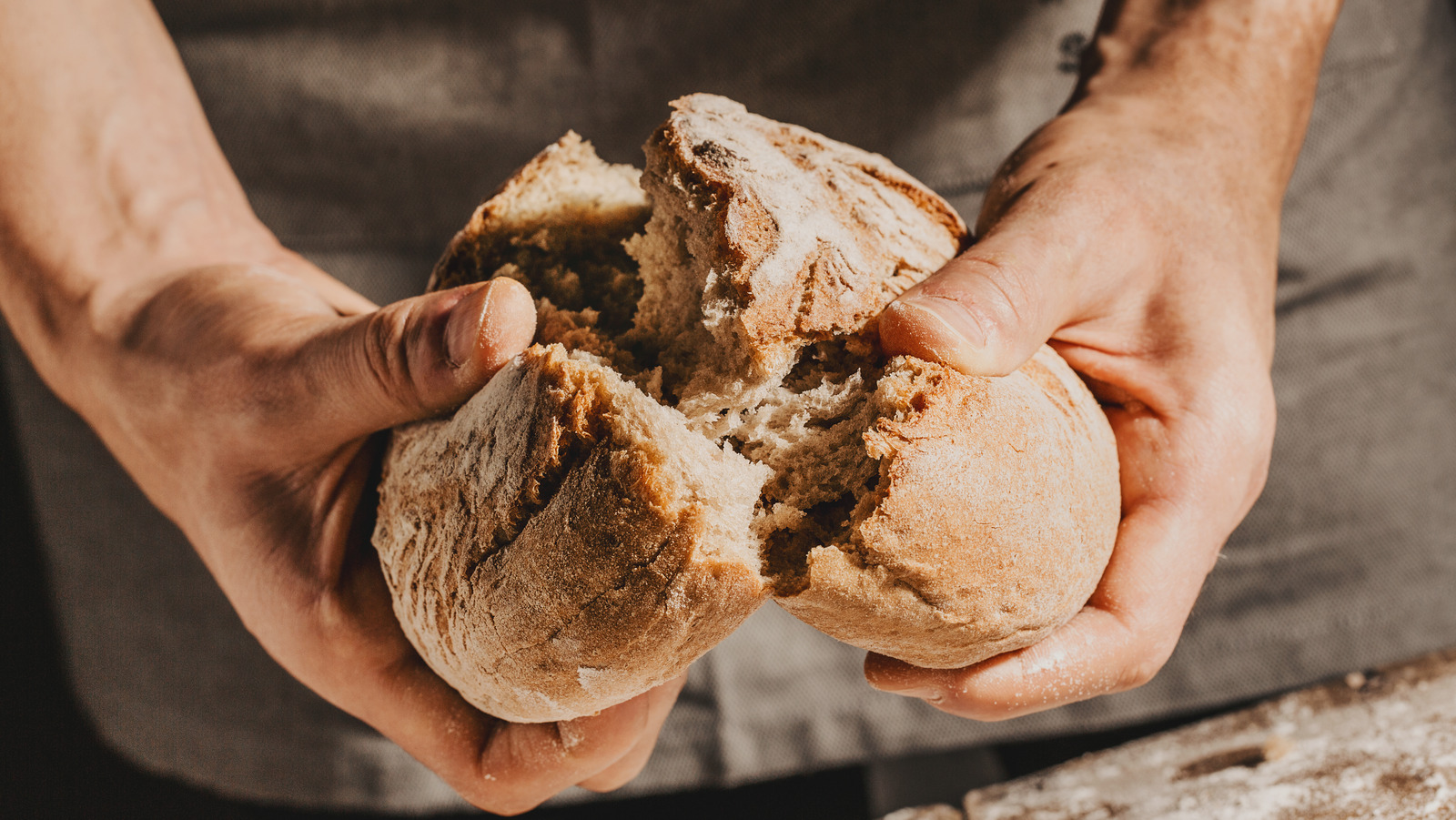
Let me begin with Mark’s story of the feeding of the 5,000 as a metaphor for what we’ve been discussing. The meaning of every person’s life is found in these actions Jesus offers over and over again. We are the bread, blessed by Divine Love, in life we experience the brokenness of being human, but if we allow ourselves to break open and to be given in all of our vulnerability, our gifts to this world multiply beyond that which we can even imagine.
When we break closed, when we isolate, shut down, get stuck in anger, bitterness, fear, and grief for prolonged periods of time, ignore, deny or bury the pain of life, we get stuck in brokenness. There becomes no redemption for the pain, no healing, no growth, and certainly no opportunity to help others from our own experience.
When we are broken open, we lean into our vulnerability, we strive to learn and grow and be transformed by our struggles. The spiritual path takes everything in our lives and uses it to become more whole and more fully our authentic selves. In breaking open we find the beautiful beings we are - unique, complex and multi-faceted - and we recognize that we still have something of value to give to the world.
Here’s where it gets tricky… I don’t think we need to wait until we’ve got it all figured out to give back out of our brokenness, but we also can’t simply spew our brokenness out to the world. There are therapists and certain friends and partners for that. We pick and choose carefully who gets to see our raw brokenness.
To be given means that, in time, I can be open about my brokenness without it taking over a conversation or relationship. I can even give out of my brokenness without talking about it much, or even at all by being present for someone else in pain without having to fix it, by being aware of the moods and energy of others and touching base with those who seem down. I know many folks who use their experience and wisdom from being broken to volunteer their time in meaningful ways.
Elizabeth Lesser, in her book Broken Open, comments, “When your heart is undefended, you make it safe for whomever you meet to put down his burden of hiding, and then you both can walk through the open door.”
Sometimes being honest about our struggles creates a connection and helps you and others to feel less alone in your struggles. Just a little bit of honesty and a little bit of openness is all it takes. How many times have we told someone we’re “fine”? This effectively cuts off a conversation, which may sometimes be appropriate, but won’t be helpful in relationships that you deem important.
To have depth in a friendship or marriage, one must be willing to risk a little vulnerability and offer a peek at your brokenness. This opens the door to sharing, caring, deeper conversation.
Randy Woodley, author, professor, activist, scholar of mixed white and Native blood tells a story in his book, How Western Christianity Got It Wrong, about an interfaith group he and his wife, Edith, were part of for many years. The group was called “The Common Table.” The founder gathered together religious leaders from many faith traditions from around the state of Oregon to find common ground. On their first retreat, they split into tables of five or six and were asked to share who they were and why they were there. Everyone talked about their responsibilities and their desire to work with other like-minded faith leaders.
Later that day the organizer asked Randy and his wife how they thought it was going. Their response surprised him, and he asked them to address the larger group. At the next gathering they shared that they felt that people seemed to be sharing at a superficial level, with very few people risking much vulnerability. They explained that they knew it was hard for people in their positions to allow themselves to be vulnerable but felt that if they didn’t move past the superficial, they would never learn to trust one another, nor become friends.
The comments struck a chord with many people and the vibe of the meetings changed as people willingly opened up more. In their subsequent meetings vulnerability caught on and there was much joy to be found there.
Woodley writes, “To be vulnerable is to be human. To be human is to remember what we all have in common. And I have come to understand that being a vulnerable human being is the purest form of our spirituality.”
We are all blessed and broken without having to do anything. But breaking open requires intention and the desire to work toward healing. Finally, it is giving that requires our greatest courage by risking our vulnerability (in appropriate situations) to develop the depth of relationships that nourish and sustain our souls.
Love & Light!
Kaye