
Join us for service at:
Meadowbrook Country Club
2149 N. Green Bay Road
Racine, WI 53405
Sunday Summer Services 10 a.m.



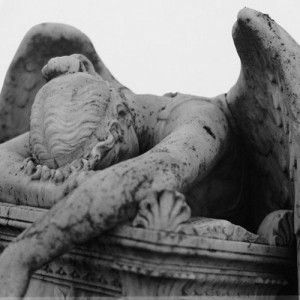
Where is God When I Hurt?
Disclaimer: I don’t pretend to have all the answers, but I’ve pondered this one for a long time and I have some thoughts. You don’t have to agree with them, or even like them, but I offer them as food for thought.
On our retreat last weekend, we talked about the desert times in our lives, the dessert times, and the broccoli (ordinary) times. We’ve all been in those desert times dealing with loss, grief, pain, betrayal, illness, depression, hopelessness, fear… and so much more. It’s at those times especially where we have a whole list of questions for God including “where are you God?”
My daughter-in-law was raised in a fairly rigid Christian denomination. Then she lost her mother when she was a teenager, and I think she’s still trying to reconcile the God she was brought up to believe in with her mother’s death. Not too long ago she asked me, Where was God when my mom got sick? How could He let her die?
To me it sounds a lot like the age-old question: why do bad things happen to good people? Which is a really good question and one that’s been debated by theologians and religious people forever.
Here’s the struggle, as I see it. Christianity has created a God who is all-loving, all-knowing (omniscient), and all-powerful (omnipotent). This means that because God loves us no matter what and knows everything – past, present and future – that God should fix everything so that people don’t get hurt. But we know God doesn’t work that way.
We are NOT saved from all painful situations. We’re not saved from stupid decisions like how I decided to play in a fountain one night when I was at Marquette, didn’t see the stump of a bush, rolled off it and tore the ligaments in my ankle. We’re not saved from illness or broken hearts or job loss. And we’re not saved from war, serial killers, mass shootings, torture of people and animals, genocide, human trafficking, abuse and so much more. God doesn’t fix any of them.
Because we are NOT saved from all painful situations then one of two things must be true. Either God is not all-loving or God is not all-powerful. If God has the power to stop horrific things from happening, but doesn’t, then clearly God is not all-loving. As imperfect as our humanly love is, there is not one person I know who wouldn’t have stopped the senseless killing of Renee Good or Alex Pretti if they had the power.
A couple of months ago a woman at the grocery store asked for prayers for her grandson who was discovered to have a brain tumor. She said she was praying that God would take it away, that she knew God could do that… the unspoken piece is “God can do that if God chooses to.” And what kind of God would choose not to grant that fervent, love-filled prayer for her grandson to not have a malignant brain tumor? Even Jesus is said to have healed the child of a Roman soldier and the child of a Canaanite woman (both Gentiles and disliked by the Jews).
The other option is that God IS all-loving but does not have the power to stop bad things from happening. We don’t like to think about that because we’ve been counting on the fact that our belief in God will protect us and not let anything bad happen to us or our loved ones. We’ve been told that if we just pray and believe in Jesus that God will grant us anything. But the reality is much different from what we’ve been told.
Some people choose to resolve this conundrum by saying that God said “no” to their requests, or we have free will, or God wanted another angel in heaven, or God doesn’t give us more than we can handle, or there is a reason for everything, or God’s ways are mysterious.
To me that is just too much mental gymnastics. Personally, I favor for option 2 – an all-loving, but not all-powerful divine presence.
This brings us to the next set of questions… if God is not all-powerful, then where is God when we hurt, and what good is God?
The apostle Paul who was beaten, imprisoned, ship-wrecked and had an ever-present thorn in his side, said that God is everywhere.
For I am certain that neither death nor life, neither angels nor demons, neither the present nor the future, neither heights nor depths – nor anything else in all creation – will be able to separate us from the love of God that comes to us in Christ Jesus, our Savior. ~ Romans 8:38-39
There is nothing that can separate us from the love of God. That was a forward-thinking concept in Paul’s time. Afterall, God had lived in the Temple for a lot of years! And before that, God traveled with Israelites in the tabernacle or lived on a mountain. Paul pushes the envelope and says that no matter where we go, no matter what we experience, God will be there. How is that possible?
Well, Sr. Ilia Delia reminds us of Teilhard de Chardin who said that God is at the heart – the depth and center - of everything. This means that if God is at the center and depth of our very beings, there is no way to ever be without God.
So, where was God when my daughter-in-law’s mom was sick and dying? With her, within her, around her in the very air she breathed, in the people who cared for her, in the love of family surrounding her, in the sunlight and food. Mr. Rogers said that “God is in the helpers.” Can this be enough for us? Or does our God have to be a magic genie?
Just because I don’t believe God is all-powerful does not mean that I believe God does nothing when we hurt. Our spiritual connection with Divine Presence can still bring us strength, courage, stability, grounding, hope, comfort, assurance of love, wisdom, spiritual and emotional healing, and help us to feel not so alone.
Let’s talk for a moment about Rev. Dr. Martin Luther King Jr., arguably one of God’s most eloquent prophets. Soon after the protest in Montgomery, Alabama, began in early December, he started to receive threatening phone calls and letters, increasing day by day until they were up to 30 or 40 per day by mid-January. Many of the threats seemed to be legitimate and he was growing increasingly concerned and afraid.
One night, after receiving another threatening late-night phone call, he wasn’t sure how much more he could take. He wrote this about that night:
It seemed that all of my fears had come down on me at once. I had reached the saturation point…. I was ready to give up…. I tried to think of a way to move out of the picture without appearing a coward…. And I got to the point that I couldn’t take it any longer…. With my head in my hands, I bowed over the kitchen table and prayed aloud. The words I spoke to God that midnight are still vivid in my memory: “Lord, I’m down here trying to do what’s right. I think I’m right. I am here taking a stand for what I believe is right. But Lord, I must confess that I’m weak now, I’m faltering. I’m losing my courage. Now, I am afraid. And I can’t let the people see me like this because if they see me weak and losing my courage, they will begin to get weak. The people are looking to me for leadership, and if I stand before them without strength and courage, they too will falter. I am at the end of my powers. I have nothing left. I’ve come to the point where I can’t face it alone.”
It seemed as though I could hear the quiet assurance of an inner voice saying: “Martin Luther, stand up for righteousness. Stand up for justice. Stand up for truth. And lo, I will be with you. Even until the end of the world.
In that moment he felt his uncertainty disappear and he was ready to face anything, knowing he wasn’t alone. It’s worth noting that King didn’t ask for the conflict to magically be over, or for God to smote the enemy, he asked for strength and courage, and received it.
Episcopal Bishop Mariann Budde shared a story of Ernest Gordon in her book, How We Learn to Be Brave. Gordon was a prisoner of war at a Japanese prison camp for three years; his memoir was made into the movie The Bridge on the River Kwai. Initially Gordon and his fellow prisoners were very religious – reading their bibles, praying, singing, testifying to their faith and expecting God to help them, free them or lessen their sentence in captivity. But that didn’t happen. Their suffering continued, many of them died, many became angry and disillusioned abandoning all outward displays of piety and hope of being saved.
But slowly something else shifted for the men as they cared for each other, protected each other, and even witnessed some sacrificing their lives in love. Quietly they began to talk about the presence of God in their midst. This wasn’t the God they thought they were expecting, but “rather the discovery that faith was not what you believed but what you did for others when it seemed you could do nothing at all.” Budde writes, “Faith returned to them as the result of their compassion and, as they leaned into faith that God was with them in suffering, their capacity for compassion grew.”
So, where is God when we hurt? Right here. Within each of us. Giving us strength, courage, resilience, compassion and hope to get us through the challenges of life. Nothing – not life nor death nor anything else in all creation can separate us from the love of God.