
Join us for service at:
Meadowbrook Country Club
2149 N. Green Bay Road
Racine, WI 53405
Sunday Summer Services 10 a.m.



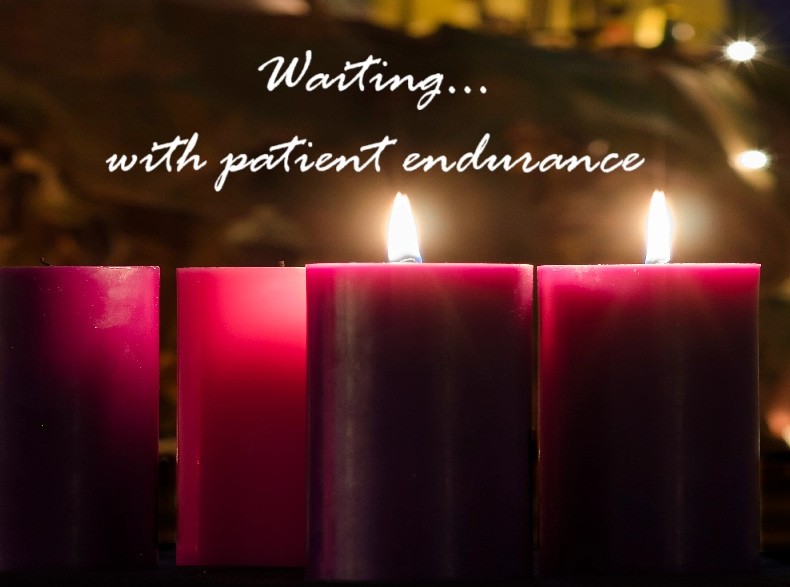
Waiting
How does a healthy soul respond to the encroaching darkness? Of the season, of life, of the world? This year we’re drawing from the wisdom of the animals to inform our Advent journey.
This week we’re taking the example of the painted turtle who survives the harsh winters by burying itself in the mud at the bottom of the pond and using its own body as a resource to sustain itself for months while it waits until it can surface again.
Waiting with patient endurance is the lesson the turtle offers us this season, and patient endurance is also the lesson Paul has to offer in Romans 8:18-25. I rewrote the passage to reflect what I believe Paul is saying with words that make more sense to us today.
Romans 8:18-25 MY interpretation
I’ve been thinking long and hard on this and I believe that the present sufferings we are all going through pale in comparison to the enlightened consciousness we can achieve as we become fully human. All creation eagerly awaits this revelation of our authentic selves. Yes, life is transient and filled with futility, but the hope is that creation itself would end its slavery to corruption and would come to share in the spiritual freedom of being One with the Divine. From the beginning of time all creation has been groaning in one great act of giving birth to a higher consciousness. And not just creation, but all who have known the sweet connection to the Source of All That Is – we, too, groan inwardly as we wait to achieve enlightenment.
We understand we are already one with the Divine, and at the same time we hope to fully realize that oneness. Hope is not hope if its object is seen; why does one hope for what one sees? And hoping for what we cannot see – the higher consciousness of which we are capable – means awaiting it with patient endurance.
Paul points out that humanity has been on a spiritual evolutionary course forever. It is a course that brings us – slowly and often painfully - to a higher level of consciousness where eventually we (individually and collectively) will become like the person Jesus was – a person of compassion, peace, justice and kindness. And then humanity will no longer be a slave to corruption. Then humanity will live into the best we can be – caring for one another and for the earth.
But this vision of the future is nothing but a hope. It’s nothing we’ve ever seen or experienced. As Paul says, we don’t hope for something we can already see, but something we can’t see. The hope that we keep holding out there in front of us, like a carrot on a stick, is the hope that this is truly possible one day. What we need is to wait with patient endurance.
That’s not the answer we want. We want to be free of the corruption of the world now. We want to be free of our own baggage, our own pain and struggles now. We want our earth to be healed of all we’ve done to her now. But there is no quick easy fix.
We’re called to wait with patient endurance but let me be clear: this does not mean doing nothing.
Consider the words of Henri Nouwen and his colleagues:
“[T]rue patience is the opposite of a passive waiting in which we let things happen and allow others to make the decisions. Patience means to enter actively into the thick of life and to fully bear the suffering within and around us. Patience is the capacity to see, hear, touch, taste, and smell as fully as possible the inner and outer events of our lives. It is to enter our lives with open eyes, ears, and hands so that we really know what is happening. Patience is an extremely difficult discipline precisely because it counteracts our unreflective impulse to flee or to fight…”
Let me repeat: waiting with patient endurance is NOT ABOUT PASSIVITY! It simply means that there is no quick fix. Whatever is going on will be a long-haul type of thing – a marathon not a sprint.
So much in life requires patient endurance: recovering from illness, injury or surgery, caregiving, grieving, systemic change, finishing school, finding a job, healing a relationship, seeking change in oneself (mentally, physical or emotionally), raising children, and so much more.
Here is a sense of what patient endurance looks like:
- Dealing with our pain and struggles head on
- Looking for answers
- Seeking a bigger perspective
- Seeking to open doors, create opportunities
- Determine what actions help us participate in the waiting
- What is our next best step to help us move forward
- Trust the process
- Maintain your balance and focus
- Knowing when to “do” something and when to release control
- Living the questions
- Being accountable and responsible for our role
When Holly Whitcomb’s mother was diagnosed with stage four colon cancer she could have shut down and given up, wallowed in self-pity or descended into depression and anxiety. Instead, she moved into a mode of waiting with patient endurance, hoping for a few more years of quality life. She became amazingly proactive in caring for herself. She intentionally chose to live positively and to nurture a healthy lifestyle. She eliminated trans fats from her diet, prepared brightly colored foods every day, including 8-10 servings of fruits and vegetables, and at age 84 she still walked 6 miles a day. She did her best to banish worry from her life and worked hard to cultivate friendships knowing that “the absence of worry and the comfort of friends have healing power.” This type of waiting empowered her, strengthened her and gave her hope for the future.
Author and activist, Joanna Macy, tells the story of being in Tibet and watching the monks work to rebuild the great monastery of Khampagar. It had once been a major center of Tibetan Buddhist culture and learning until it was almost completely destroyed by the Red Guards during the Chinese Cultural Revolution in 1966. Twenty-seven years later China shifted to a more relaxed occupation policy which allowed reconstruction to begin. But, as Macy writes, “This policy, however, could be reversed at any moment, and there was no guarantee that the monastery, if rebuilt, would not be destroyed again. That didn’t stop the monks. They faced the uncertainty by bringing to it their intention. They assumed that since you cannot know, you simply proceed. You do what you have to do. You put one stone on top of another and another on top of that. If the stones are knocked down, you begin again, because if you don’t, nothing will be built. You persist. In the long run, it is persistence that shapes the future.”
Waiting with patient endurance.
The question is: to what do each of us need to apply a stance of waiting with patient endurance? What in our lives does not have a quick fix and yet needs us to apply ourselves to it in the most healthy way possible? Not pushing, not forcing, but walking deliberately forward. Patiently enduring as we wait for answers, resolution, change.
I wish I had better answers for you, but I am willing to wait with you, patienty enduring.
Love & Light!
Kaye