
Join us for service at:
Meadowbrook Country Club
2149 N. Green Bay Road
Racine, WI 53405
Sunday Summer Services 10 a.m.



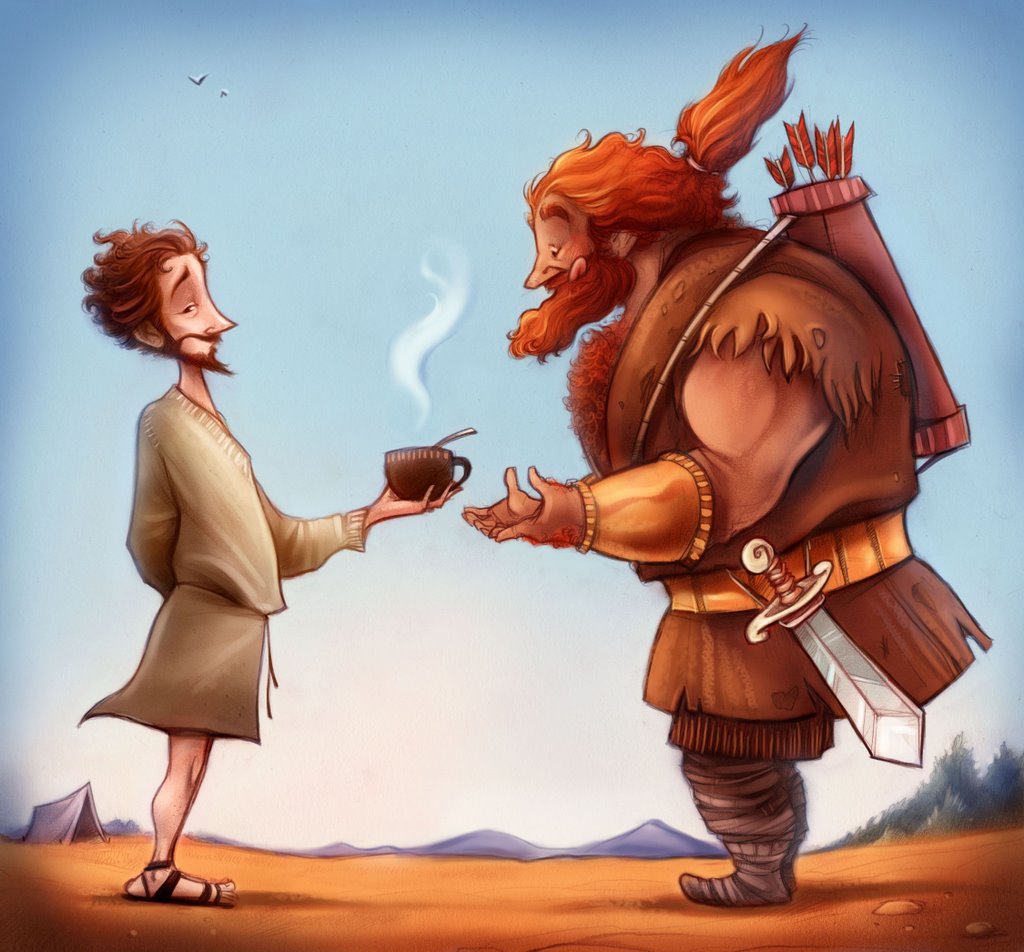
Jacob & Esau: The Struggle to be Blessed
This is our last week in the book of Genesis; the story of God’s promise now moves through Jacob and Esau, the twin grandsons of Abraham. Their story is messy from the beginning: rivalry, favoritism, manipulation, fear, and blessing all tangled together.
Jacob is not exactly an obvious hero. His name literally means “heel-grabber” because he emerged from the womb holding onto his brother’s heel, and much of his early life fits that reputation. He deceives his brother Esau out of his birthright and tricks his father Isaac into giving him the blessing meant for the firstborn. Yet, strangely and scandalously, Jacob becomes the carrier of God’s promise.
That is one of the primal themes of scripture: God often works through the unexpected person, the flawed person, the one who does not seem to deserve the role they are given. Jacob’s story reminds us that divine calling is not the same as moral perfection.
After years away from home, Yahweh tells Jacob it is time to return. But going home means facing Esau, the brother he wronged. He cannot undo the past. He cannot control Esau’s response. All he can do is move toward the encounter with fear, humility, and hope.
On the night before the reunion, Jacob takes everyone and everything across the river Jabbok in preparation for meeting Esau. Then he returns alone to the far side. In the darkness, he wrestles until daybreak with a mysterious opponent. By morning, Jacob believes he has encountered God face to face.
That image is powerful because so many of us know what it is to wrestle through the night. We replay old choices. We face the harm we have caused. We wonder whether reconciliation is possible. We argue with ourselves, with our conscience, with God, with the truth we would rather avoid.
What if God is present in that wrestling too? Not only in the sanctuary, not only in peaceful moments, but also in the anxious hours when we are forced to see ourselves clearly. The Divine Presence is not absent from our struggle. Love meets us there, asking us to be honest, to take responsibility, to seek forgiveness, to make amends, and to grow in compassion.
By dawn, Jacob receives a new name: Israel, one who strives with God. He does not leave unchanged. He also does not leave unmarked. Jacob walks away with a limp, a reminder that deep transformation is rarely painless.
Still, he walks into a new day. The sun rises, and with it comes the possibility of reconciliation, wisdom, and a different way forward.
Maybe that is good news for us too. When we have the courage to wrestle honestly—with our past, our fear, our guilt, our hope, and our God—we may come away limping. But we may also come away blessed.
Love & Light!
Kaye