
Join us for service at:
Meadowbrook Country Club
2149 N. Green Bay Road
Racine, WI 53405
Sunday Summer Services 10 a.m.



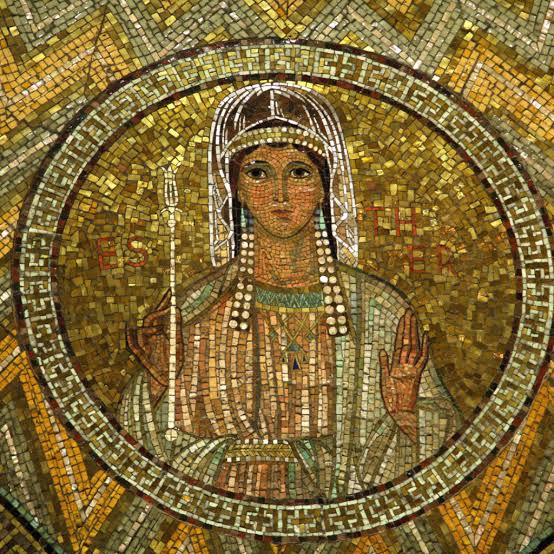
Esther: Who's to say?
Unlike most biblical books, Esther did not emerge from oral tradition; it was written to be read aloud. This fictional story follows an orphaned Jewish girl who becomes Queen of Persia and saves her people. With vivid characters, a fast-moving plot, drama, deception, treachery, and a happy ending for the Jews, it was designed to entertain. Literarily, it is considered a farce, fairy tale, and satire, with elements of sexual comedy.
Interestingly, the original Hebrew narrative was largely secular and never named God. It contains no prayers or religious rituals - aside from fasting, which is presented as personal preparation rather than an explicitly religious act - nor does it mention Jewish law. Later Greek additions to the text do include the name of God, and some translations of the Bible merge these with the Hebrew text while others don’t. The Inclusive Bible places the Greek additions in brackets, which can make the text confusing. Yahweh, the Divine seems present behind the scenes—perhaps a message in itself.
The book of Esther was most likely written in the late fifth century BCE and is set among the Jewish diaspora in the Persian Empire during the reign of King Ahasuerus, also known as Emperor Xerxes.
The story may have been created to provide historical justification for an established Jewish day of feasting, drinking, and celebration that is not mentioned in the Torah. The festival of Purim, usually observed in March around the time of Mardi Gras, continues today and commemorates Queen Esther’s rescue of the Jewish people from destruction. It may originally have replaced a spring fertility festival honoring the goddess Ishtar. On Purim, Jews wear costumes and mock life’s seriousness. During the reading of Esther, people use noisemakers or stamp their feet whenever the villain Haman is named. Other traditions include giving money to the poor and sharing food with family and friends.
For my message on this Sunday, I chose to “preach” the rest of the sermon as Queen Esther. The link to the video may be found here.
After Queen Esther shares her story, she also shares a piece of wisdom. When Esther was afraid to lay her life on the line to save her people, her cousin Mordecai said this to her: “Who is to say whether you came to the royal court for just this moment?” He offered no guarantee of success, no certainty of an outcome, simply a question and the possibility that her place of privilege had become a place of responsibility and salvation.
We all live in a world of uncertainty. We all make choices about how we respond to situations. I feel in my soul that there is a holy undercurrent to all our comings and goings. And, who’s to say? Perhaps that undercurrent carries us to certain places and times for particular moments. Moments when we have something valuable to offer, whether we believe it or not. Who’s to say our faith, intelligence, creativity, kindness, generosity, leadership, talent, hard work, understanding isn’t exactly what a situation calls for.
Asking ourselves this question may make all the difference in the choices we have yet to make. Who’s to say we weren’t exactly where we were for just that moment?
Love & Light!
Kaye