
Join us for service at:
Meadowbrook Country Club
2149 N. Green Bay Road
Racine, WI 53405
Sunday Summer Services 10 a.m.



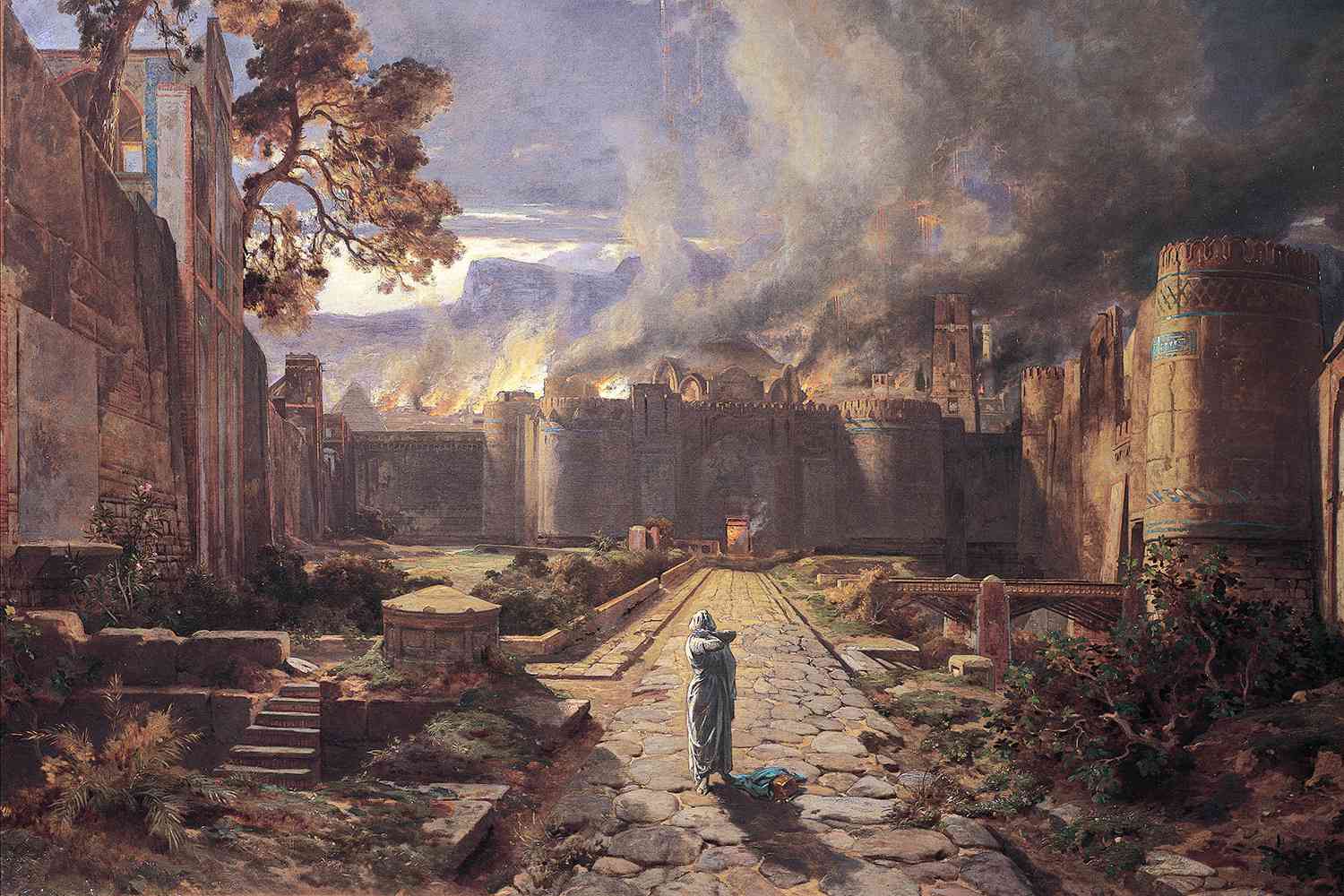
The Challenges & Lessons of Sodom & Gomorrah
As we continue our series on Going In-Depth with the Old Testament Stories, we come to the challenging and often misinterpreted story of Lot and the cities of Sodom and Gomorrah. There is much to unpack here, but I will do my best to be simple and concise. Let’s begin with some details.
First, who was Lot? Lot was Abraham’s nephew. So, another descendent who traced his roots all the way back to Noah and then Adam and Eve.
Second, it’s important to know that Genesis 18:16 through 19:38 (from Abraham’s conversation with God, to Sodom and Gomorrah, to Lot and his daughters at the end of 19) comes from three different authors and times. The story of Lot’s daughters getting him drunk and sleeping with him to get pregnant to continue the family line (Gen. 19:30-38) most likely comes from a much older tradition that used this story as a way to explain where the tribes of Moab and the Ammonites came from and why there was animosity between them and Israel. Interestingly, there is no denunciation of the incest in this account. We also remember that Ruth was a Moabite, so both David and Jesus were descendants of one of the daughter’s illegitimate sons (apparently everyone has skeletons in their family closet).
Written next was the story of Sodom and Gomorrah (Gen. 19:1-29), even though it is placed after the conversation between Abraham and Yahweh (Gen. 18:16-32). It is thought that the story of Sodom and Gomorrah raised so many theological questions about God’s judgment, justice and punishment, that it needed a lead in. Fun fact: in the original text it was not Abraham who stood before God (in a subordinate position), but it was Yahweh who stood before Abraham. It’s believed that a scribe somewhere along the line thought it was inappropriate for God to stand before a human and switched their roles.
You’ve got to love Abraham in this conversation (dare I say confrontation in Gen. 18) with God. He is deferential, but also blunt and persistent. He wants to know that the God who judges is also the God of justice. He wants to be sure that God is not arbitrarily smoting the good with the bad. Because of this dialogue, we receive assurance that God will consider the innocent and feel a little better about God being fair with the people of Sodom and Gomorrah.
But there has been a great outcry against Sodom and Gomorrah, and “their sin is very grave,” says Genesis 18:20. God must respond.
Did the cities of Sodom and Gomorrah really exist?
There is no conclusive evidence that they did exist. Some try to place them at the southern tip of the Dead Sea and claim they were destroyed by a meteor exploding over the cities or maybe a volcano or earthquake. But again there is no hard proof. It’s likely the cities and the story were simply created for a purpose.
What was the sin of Sodom and Gomorrah?
Here’s where the interpretations of this passage have been perverted. We know that the word sodomy comes from the name of the city, Sodom. And we know that Lot saves the travelers/angels from ALL the men of the city gang-raping them. Many people assume then, that this is the primary sin being committed in Sodom and jump to the conclusion that, therefore, God condemns homosexual behavior. This very passage has become what they term a “clobber passage” used to condemn same-sex relationships. But that’s a pretty big leap from gang-rape to condemnation of consensual, loving, caring same sex relationships. The focus on this interpretation has distorted the text and diverted us from seeing the other meanings within this story
In addition, the text itself, and other passages in the Bible that refer to Sodom and Gomorrah, do not point to homosexuality as the sin of Sodom and Gomorrah. This story merely offers it as one example of Sodom and Gomorrah’s sins – and rape is always wrong. The sins that scripture itself points to are more general: pride, worshipping other Gods, hoarding food, lack of hospitality, and indifference to the needy.
Finally, let me briefly address Lot’s shameful response to the crowd and share a footnote from our Inclusive Bible that states, “It is frankly shocking, and a powerful indictment of the patriarchal interpretation of the scriptures, that so much has been made of the actions of the inhabitants of Sodom, and so little of Lot’s offer to let the crowd rape his daughters.”
To return to the story… after the townsmen reject Lot’s offer, the travelers/angels pull Lot into the house and tell him to get his family out of the city before they destroy it. Lot fears they can’t get far enough away fast enough, so the angels agree to spare the town of Zoar and let them hide there. However, Lot and his family are given a warning, do not look back or stop or you will be swept away.
Lot’s wife doesn’t heed the warning, looks back, and is turned into a pillar of salt. The last line reminds us that God has kept God’s covenant with Abraham by saving lot and his daughters.
So, this leaves us with the question of what message we can glean from this challenging story?
I’m sure there are multiple ways to look at this story, but for now let’s consider the Biblical theme of life and death, which was not about the biological functioning of our bodies. The Biblical notion of choosing life or death considered how communities and individuals lived life in relationship to self, others and the world.
To choose life as a community meant to live seeking justice and equality for all. It meant offering welcome and hospitality to strangers and foreigners. It meant living with kindness and compassion.
Let me offer two small recent examples of communities who chose life.
The World Cup in soccer is currently happening and the Algerian team chose the Midwest college town of Lawrence, Kansas, as their training headquarters. What has been so beautiful is that the community has essentially adopted the team and done many things to embrace and care for them. As soon as the town learned they were coming, they held soccer 101 classes so people could learn about the game. They also held classes on Algeria to learn more about the country and its people. A land artist created a huge Algerian flag on the ground at the University of Kansas where they were training. The local high school band learned the Algerian national anthem and played it enthusiastically. Local signs welcomed them into restaurants with the owners and staff learning phrases in Arabic to help the Algerians feel at home… and more.
This is what the World Cup was supposed to do, create relationships and community between countries and people. The people of Lawrence, Kansas, chose a life-giving way to respond to their guests.
Have you heard of YIGBY? It stands for “Yes, In God’s Backyard,” and is a movement to build affordable housing on faith organization properties. It stands in defiance of NIMBY or “Not In My Backyard.”
Recently, Trinity Episcopal Church, a historic church in Lower Manhattan announced that it is spearheading a new 120-unit development for low-income households on a nearby property. In addition to being a safe place to call home, the building will have “outdoor use spaces, a food-focused learning space, and flexible spaces for events, workshops, and community programming.” In addition, there will be many units reserved for those individuals and families who have been homeless.
This is one way a church community chooses life.
Choosing death looks like the exact opposite: not caring about our neighbors or foreigners, building walls, violence, disrespect, lack of kindness, lack of welcome and hospitality.
Clearly Sodom and Gomorrah chose death, and while the ancients understood God to be the destroyer of those cities, we know that it is people’s choices that cause destruction. Sadly, even though there may be good people crying out about the injustice, it isn’t always enough to change things and everyone suffers, even the innocent.
Lot’s wife is an example of what happens when an individual does not make life-giving choices for themselves. The ancients may have used the illustration of turning to salt to explain the geological formations of salt pillars around the area of the Dead Sea, but metaphorically it works as well. Yes, we want to be “salt for the earth” to bring flavor, thereby making the world a better place. But too much salt destroys – it will kill grass; it prohibits plant and fish and mammal life in the Dead Sea. And we know that in people, too much salt is bad for your arteries, heart, and brain. Lot’s wife was encouraged to look toward the future, not back toward where they’d come from. But in her inability to do so, was turned into salt.
Choosing life as an individual means being open to learning and growing, interacting with others, offering kindness and hospitality where we can, volunteering, being positive and creative, and seeking the healing of relationships. It also means looking forward. The past should teach us and guide us, but to get stuck there is not life-giving.
Choosing death as an individual looks like the opposite of the above. When we deliberately isolate ourselves, don’t seek mental, physical, and emotional help when needed, stay in unhealthy relationships and situations, or try to live in the past instead of learning from the past, we are essentially choosing a form of death.
Lot’s wife reminds us to keep seeking a life-giving path. And the destruction of Sodom and Gomorrah reminds us to live in healthy, life-giving ways with one another. We must choose life as a task for the entire community and for ourselves.
Love & Light!
Kaye