
Join us for service at:
Meadowbrook Country Club
2149 N. Green Bay Road
Racine, WI 53405
Sunday Summer Services 10 a.m.



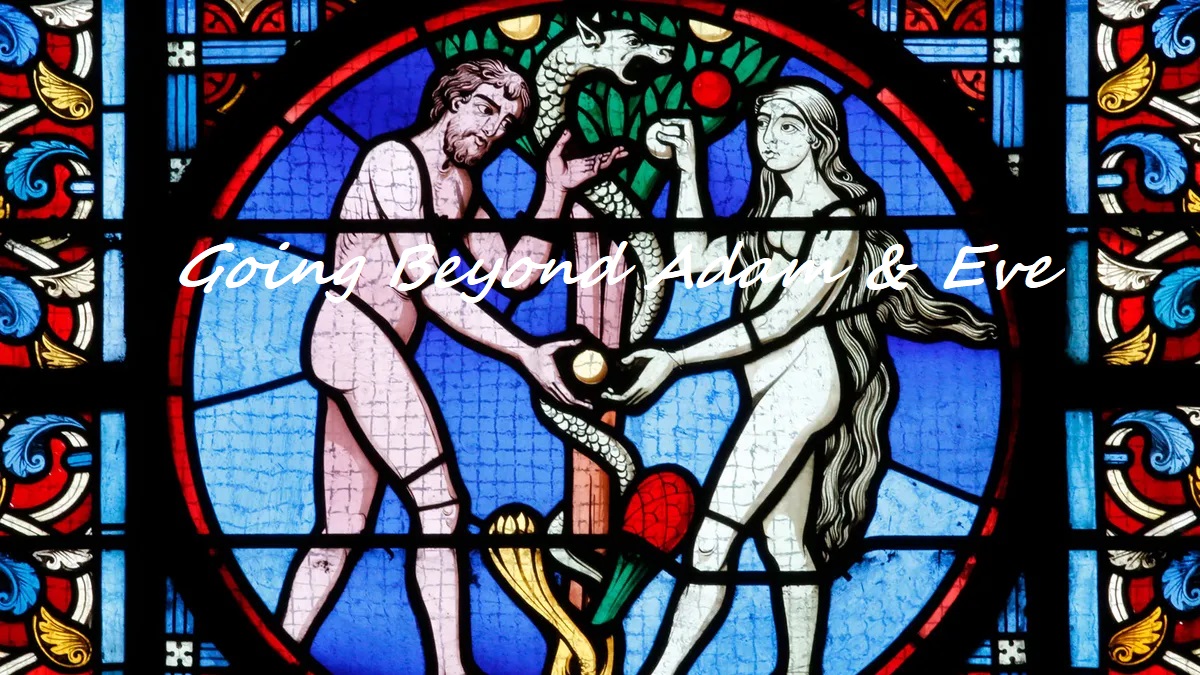
In The Beginning: Take 2
As we begin our summer sermon series: Going In-Depth With the Old Testament Stories, let me remind you that the Bible is not a general theology book about God, nor does it speak in abstract ideas. The Bible is about a specific people (known as the Jews, Hebrews or Israelites) and their specific history and cultural memories and their understanding of God’s movement in the midst of it. Like Renita Weems, OT professor at Vanderbilt University Divinity School, says on the first day of class with her first- year students, “This is not a course on what God said. This is a course on what the ancient Hebrews said God said.”
This is crucial for us to understand. These are the stories that have guided people for thousands of years. Many of the stories have become so familiar that they are often referred to in literature, TV shows, cartoons, movies and even casual conversation. I was watching a show just last week that referenced David and Goliath. Consider other examples like Samson and Delilah, Jonah and the whale, Abraham and Isaac, Job, Daniel and the lion’s den.
This summer I’m going to take a closer look at 12 of these stories. Because, other than a general understanding of the reference, how much do we truly know about the stories? Let’s dig in deeper for the historical, cultural context and take a more critical look at them.
Where best to start this series than origin story of the Israelites? Afterall, if you were going to compile a definitive set of scripture for your religion, one should set the scene with the story of where you, as a people, came from. It’s interesting to note, though, that these creation stories were written AFTER the stories of how Israel came to be a people, beginning with Abraham and culminating with the exodus from Egypt in the 13th century BCE.
I’ve called this sermon “In the Beginning: Take 2” because Adam and Eve is the second creation story. Genesis 1 is a poetic song created by a completely different author and perhaps patterned after an ancient Babylonian myth. Its structure goes through the first seven days of creation where God speaks into being the earth, sky, sun, moon, rivers, plants, animals and, finally, people. Then God looked at creation, proclaimed it “very good” and rested on the seventh day. This was written about 500 BCE.
Genesis 2 and 3 (the Adam and Eve story) was written by a completely different author about 400 years earlier around 900 BCE. The two stories are different in a number of ways, one of which is the name used for God. Yahweh is used by the author of the second creation story. Another is the order in which the world is created.
As we examine the myth of Adam and Eve, let me emphasize again that this is a story about the Israelites specifically. They are not the only people on earth, nor are they the forebearers of everyone. In Genesis 4 we find out that there are other people inhabiting the earth, because suddenly Adam and Eve’s son, Cain, takes a wife. In ancient times there were many tribes of people and many gods and goddesses. Adam and Eve is the creation story for this particular tribe of people and their god.
Unlike the first creation story, where humans were created last, in the second creation story, humans take pride of place and were created first. Yahweh molded and shaped an earth creature (this is the literal translation of the Hebrew word adam) from the clay of the earth (adama means soil). This wonderful pun is akin to us saying that humans come from humus. Then God breathed life into the earth creature.
After that God created a garden in Eden for the earth creature to live in, bringing forth trees and food from the soil. And in the center of the garden were two trees, the Tree of Life and the Tree of the Knowledge of Good and Evil. Scholars have pondered the symbolism and reason for two trees with many different explanations, but I like the explanation from our Inclusive Bible. It suggests that the Tree of Life is the tree of unity, and eating from it enables one to see all things as interconnected and sacred. While the Tree of the Knowledge of Good and Evil represents dualism, seeing things as black and white, right or wrong. This is the tree of separateness and aloneness, and hence a death of a certain kind.
To eat only of the Tree of Life perpetuated a state of paradise – no judgment, no shame, no guilt. Everything is part of the Divine. It is an ideal spiritual state. Yahweh essentially said, please don’t eat of the other tree, for when you do, you will cease to see the intricate beauty of all things and you will be forever changed.
Yahweh then decides to fashion a companion for the earth creature, creating all the animals of the earth and letting the earth creature name them (implying superiority over them). But fish, birds and horses didn’t quite fit the bill. So, Yahweh put the earth creature to sleep, divided it in two (or maybe uses a rib, depending on how you translate it) and then Yahweh made one side male and one side female.
Note: in this more precise, literal translation, man was not created first. A non-gendered being was created first and then God split the being and gendered each half. So, the use of this story to subjugate women, diminishing them as “help-meets” (in the original King James Version) because she was created second out of Adam’s body, is dis-ingenuous to the original Hebrew text. The original Hebrew is difficult to translate. Our Inclusive Bible uses “companion.” But Robert Alter’s commentary uses “sustainer beside” the human because the Hebrew implies a much more active role for the person who is alongside, or a counterpart to, the first person.
So, if you didn’t know this was a myth, the talking snake should have given it away. `The snake was never meant to represent the devil; there was no devil in ancient Israel’s theology. The snake was an ancient symbol of the indigenous Goddess fertility religions, and the primary temptation of the Hebrews to dabble in other religions. So, it is possible that this was an attempt to discredit them and ensure that ancient Israelites did not seek counsel of, or worship with, the priestesses of the Goddess.
As you know, the wily snake convinces the woman to eat the fruit (which was not an apple, and is in fact not named at all), who convinces the man to eat. Suddenly they are plunged into a dualistic world where they know they disobeyed, where they know they are naked, where they know they are in trouble.
Now the man and woman lived in paradise because they had a covenant with God – a promise of mutual responsibilities in a reciprocal relationship. They would live freely in the garden, knowing the unity and sacredness of all of life as long as they were faithful to the one thing God asked of them. Humans broke the covenant and lost that precious perspective. Yahweh exiles them from the garden to struggle in the world.
Covenant is one of the primary themes in the Old Testament, which we’ll hear again and again – with Moses and Abraham and David, and many others. For the ancient Israelites, Yahweh was not a distant God, but one who desired to be in right relationship, a covenanted relationship with humans. For the ancient Israelites their understanding was that when one fulfilled one’s relationship and responsibilities to God, life was good, like living in paradise. When one doesn’t, things get tough.
As Marcus Borg writes in his book, Reading the Bible Again for the First Time, “Our lives east of Eden are marked by exile and we need to return and reconnect… such are the central claims of Israel’s stories of human beginnings.”
When we are attentive to our spiritual journeys, when we seek intentionally to be in right relationship with the Divine and one another, it makes a difference. We know it doesn’t mean we don’t have challenges and difficulties, but I believe we have more strength and resilience and equanimity to get through them.
The Christian Church, instead of encouraging people to be in a covenantal relationship with the Divine, established a set of rules and rituals and beliefs that were supposed to be followed for God to bless you. A covenantal relationship with God (not unlike a covenantal relationship with your partner, family or friends) would strive to love with unconditional love, would seek mercy, forgiveness and justice, would offer kindness and compassion. It would seek understanding and to strive to see all people, all creation as sacred. It would nurture the relationship by spending time together. With the Divine this might look like prayer, service, worship, study, meditation, stillness or any one of a number of ways one connects with God.
When we actively live this way, our spiritual relationships ground us, bring us more calm and peace, steep us in gratitude. We recognize the sacred around us so much easier, and we treat ourselves and others better… metaphorically we experience the world around us as paradise.
Perhaps it would benefit our spiritual journeys to consider engaging in a more covenantal relationship with the Divine, a reciprocal relationship that would bring us back out of the loneliness and exile we often feel in live, to a deep connection with a generous, unconditionally loving Presence, that offers guidance, peace, hope and a deep abiding joy when we’re in that connection.
Love & Light!
Kaye